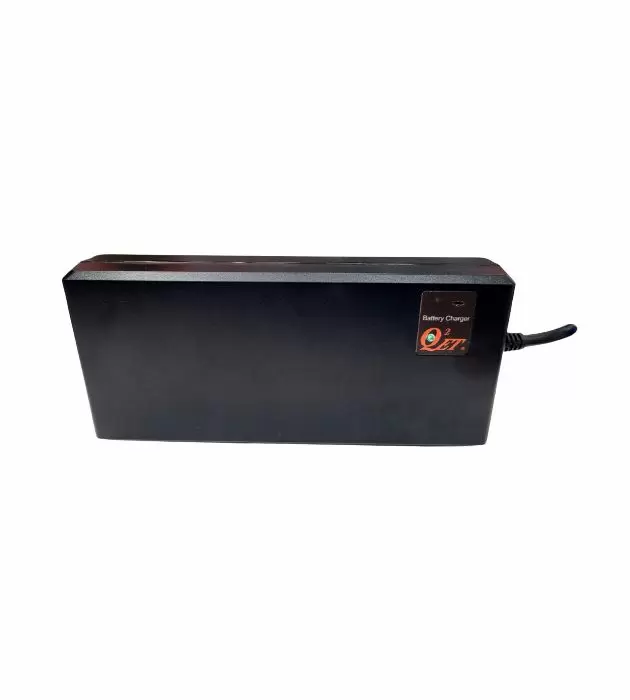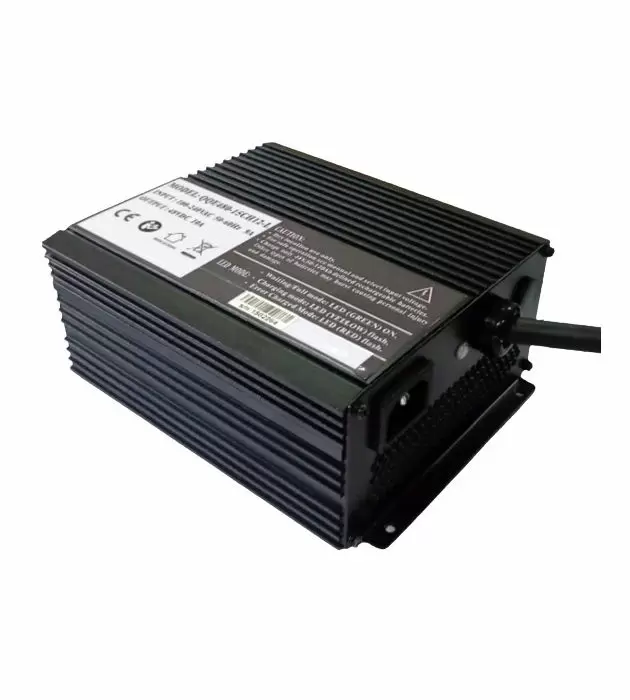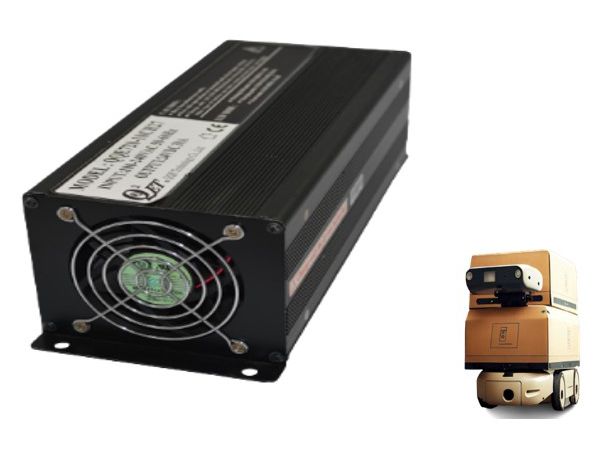
Lithium / Lead Acid Battery Charger for Automation Guided Vehicle
When looking for a suitable unmanned guided vehicle charger, you can choose a suitable lithium/lead-acid battery charger from the battery specifications and required charging time. QQE Technology knows that unmanned vans play a pivotal role in intelligent logistics and automated manufacturing, so the charger for its power source must be stable and reliable. From 24W to 7.2KW output power, QQE Technology provides a series of professional and comprehensive lithium-lead-acid battery charger solutions for unmanned vans.
Automated Guided Vehicles (AGVs) play an increasingly important role in modern logistics and manufacturing. They rely on batteries as their primary power source, so the choice and use of chargers is crucial. For smart lithium-ion or lead-acid battery chargers, here are some points to consider:
- Compatibility: Ensure the charger is compatible with the battery type (lithium-ion or lead-acid). Different battery types have different charging needs and limitations.
- Charging Strategy: Smart chargers often have various charging modes and strategies, such as balanced charging, fast charging, and three-stage charging. Understand the needs of your AGV battery and choose the appropriate charging mode.
- Communication Features: Smart chargers might have the capability to communicate with AGVs or central management systems to convey charging status, battery health, and other information. Make sure these communication features are compatible with your system.
- Safety Protections: Choose chargers with multiple safety protections like overload protection, overheat protection, and short circuit protection.
- Automatic Stop Feature: The charger should automatically stop charging when the battery is full to prevent overcharging.
- Energy-Efficient Design: Consider choosing energy-efficient chargers to reduce energy consumption and costs.
- Cooling System: Smart chargers should have an efficient cooling system to prevent excessive heat generation during charging.
- Maintenance and Monitoring: Ensure the charger has maintenance and remote monitoring capabilities, so problems can be detected and fixed promptly.
- Quality and Certification: Select the reliable quality chargers that have undergone certifications such as CE, UL, etc.
- Installation Location: Consider the charger's installation location, ensuring it's in a dry, well-ventilated area away from flammable items.
- Emergency Shutdown Feature: Ensure the charger has an emergency shutdown or power-off feature to handle any unforeseen circumstances.
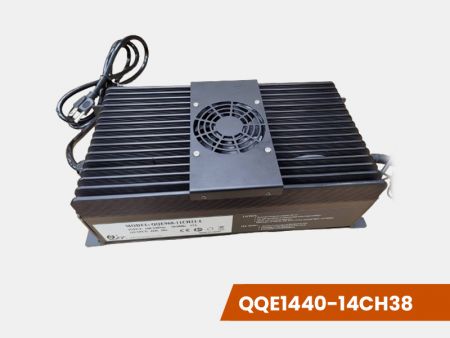
36V 40A, Lithium / Lead Acid Smart Battery Charger, IP54, Fan, Iron Case
Model P-1, QQE1440-14CH38
36V Lithium / Lead acid Battery Charger is available with wattage 1440W, output voltage36V,...
Details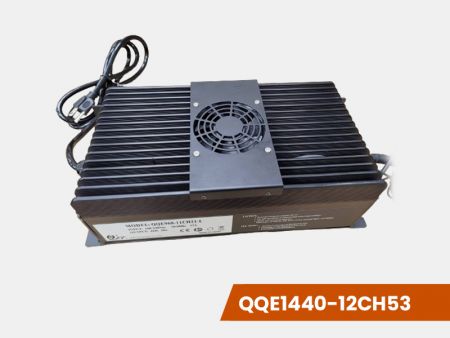
48V 30A, Lithium / Lead Acid Smart Battery Charger, IP54, Fan, Iron Case
Model P-1, QQE1440-12CH53
48V Lithium / Lead acid Battery Charger is available with wattage 1440W, output voltage 48V,...
Details